
How to choose the right infrared heating panel
The right panel comes down to three things: wattage, placement and type. This guide walks through each step so you can choose with confidence, not guesswork.
How much power the room needs
A rule of thumb is about 50–100 W per square metre. A well-insulated new build needs the lower end; an old or poorly insulated room needs the upper end. High ceilings, large windows and exterior walls all push the requirement up.
You don’t have to do the maths: our energy calculator asks for the room details and suggests the right wattage and matching products in seconds.
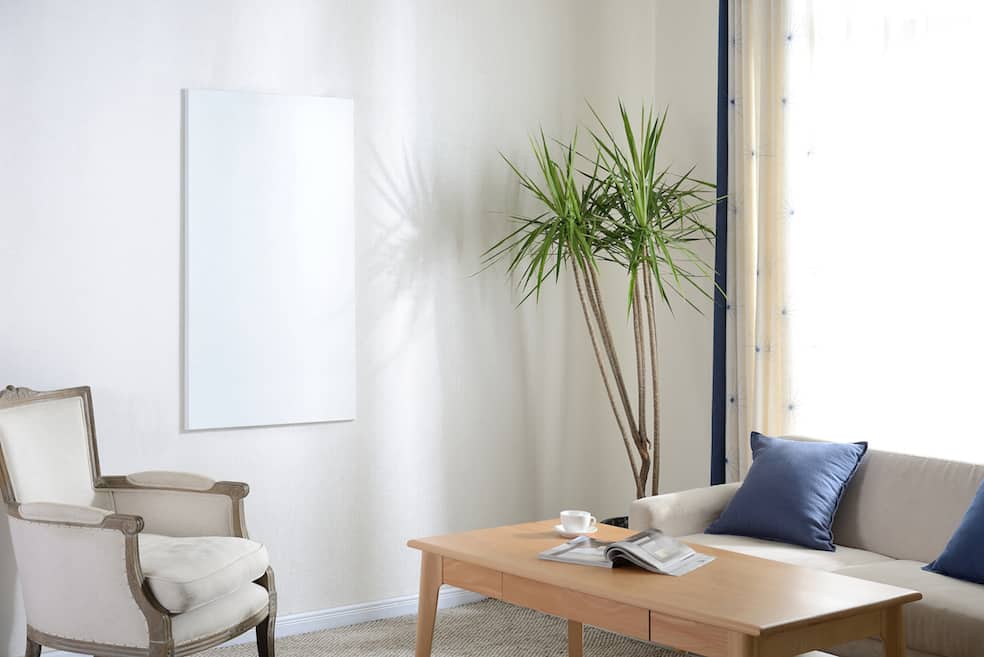
Which panel fits your room
White wall / ceiling panels
The classic, most affordable choice. A slim white panel suits living rooms, bedrooms, offices and ceilings.
Glass panels
A tempered-glass finish that blends into a modern interior. Available in clear and coloured glass.
Mirror panels
A mirror and a heater in one. Ideal for bathrooms and hallways where you need a mirror anyway.
Ceramic panels
A natural stone surface stores heat and keeps radiating it long after the panel switches off.
Printed (custom-image) panels
Order a panel with your own photo or artwork, turning the heater into wall art.
Bathroom panels
Damp-proof solutions for the bathroom, often with a towel rail. They keep the room warm and dry.
Installation rules at a glance
Installation
A panel needs a clear radiation path. Keep furniture and curtains away and aim the radiation where people actually are.
A quick checklist before you order, so every important decision is made.
- Measure the room area and work out the total wattage needed (≈ 50–100 W/m² depending on insulation).
- Decide on placement: a wall gives directed heat, a ceiling gives more even coverage.
- Choose the type to match the interior and room (white, glass, mirror, ceramic, printed).
- Add a thermostat or WiFi control to keep the temperature precise and save energy.
- When in doubt, split the load across several smaller panels for more even warmth.
Tip. One big panel rather than two small ones? Not always. Two smaller panels on different walls give more even, comfortable warmth than a single large one on one wall.
Ready to choose?
Calculate the right wattage or browse products by category, and don’t hesitate to get in touch for help.